


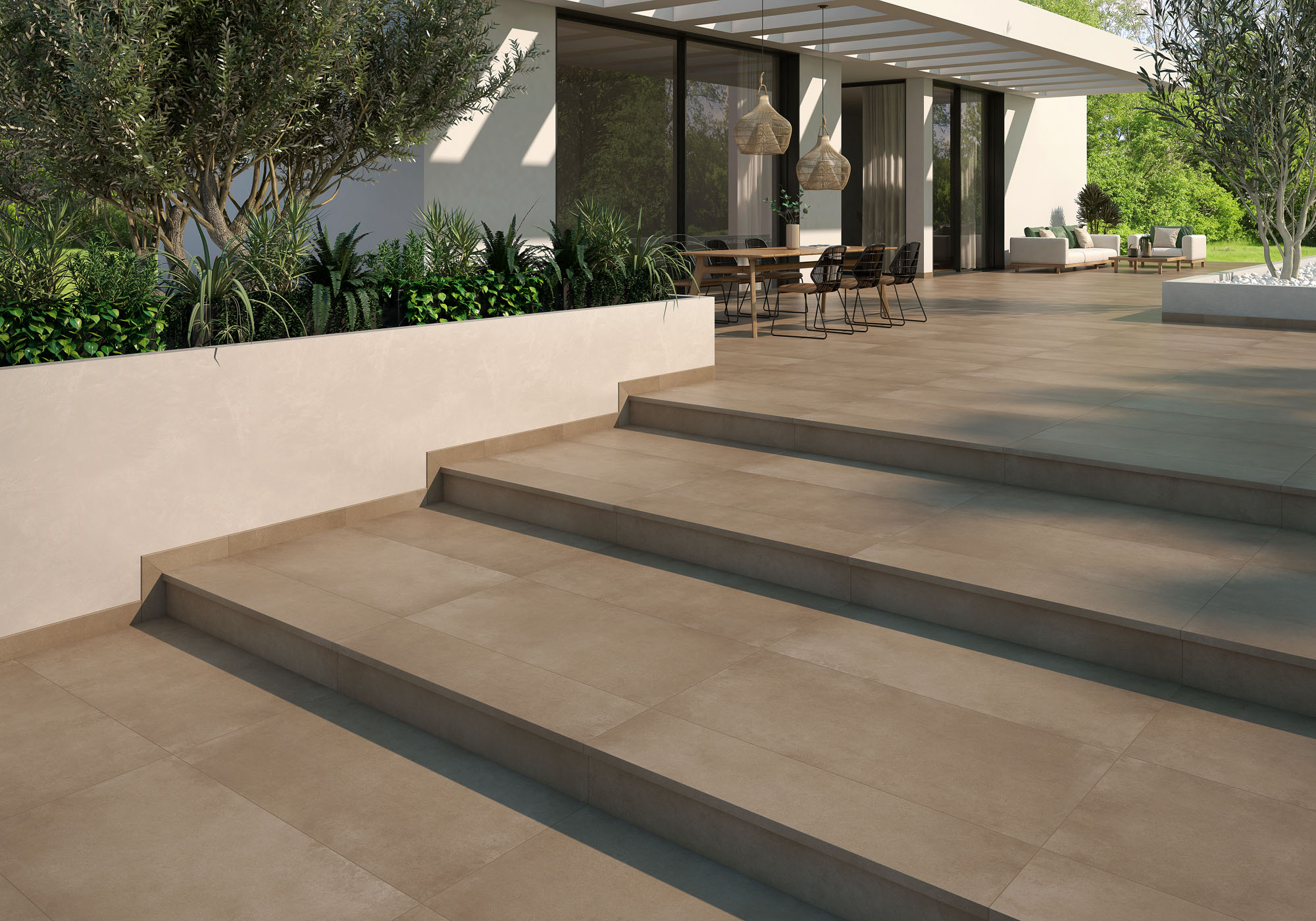
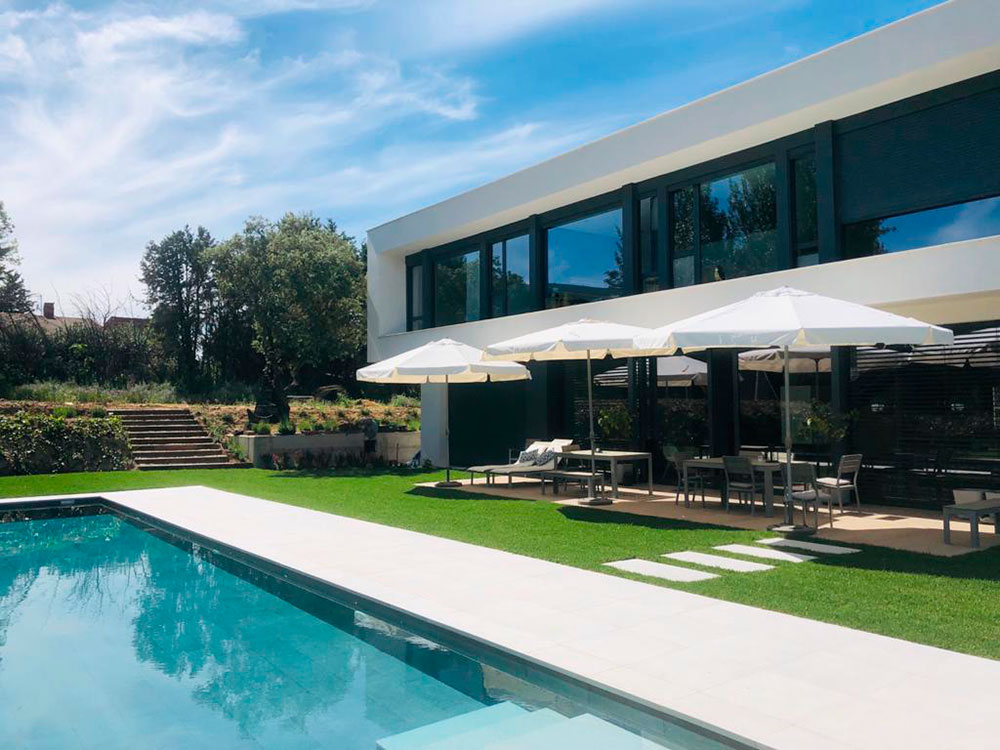
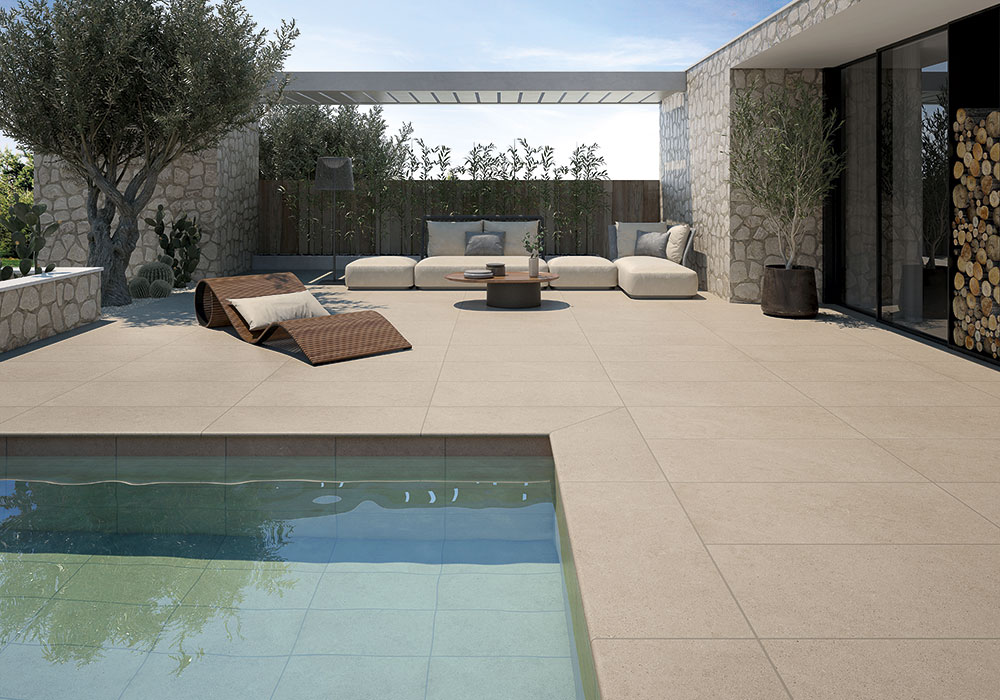

Thermal tiles: the latest in flooring that heats up less with solar radiation for swimming pools, terraces, and solariums
If you live in a high-temperature region and want to enjoy your patio or pool without worrying about how hot the tiles get, athermic paving stones are the best solution. This type of ceramic tile is designed to absorb less heat than other materials, meaning the temperatures reached when exposed to sunlight are lower. We will explain the characteristics, advantages and why you should choose them for your outdoor area.
What are athermic paving stones?
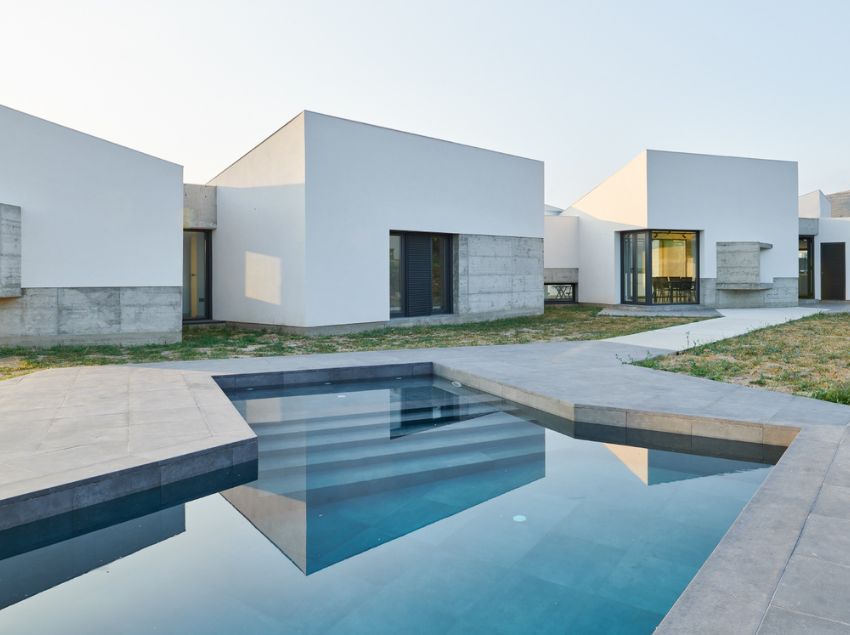
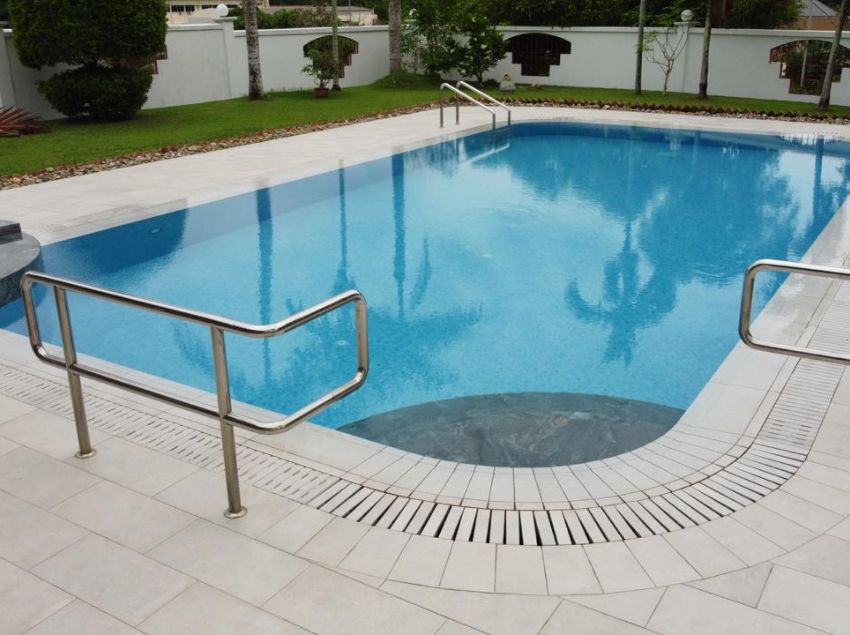
An athermal tile is a porcelain ceramic covering whose surface absorbs or retains less heat than other tiles when exposed to direct sunlight. This property means that athermal tiles heat up less than other tiles and, more importantly, reduces the risk of burns when walking barefoot on them. For this reason, athermal tiles are the perfect choice for areas around swimming pools, terraces, and solariums. Pools or for outdoor areas like terraces, patios and solariums in warm places exposed to the sun.
Technical characteristics of athermic porcelain paving stones
To understand why these tiles are more suitable for warm climates, it is important to know their technical characteristics:
- Less heat absorption: They use special materials and treatments that reduce heat buildup on the tile surface.
- Light colors: they tend to come in light tones, as they reflect the sunlight better than dark tones.
- Specific texture: they can come in non-slip finishes, especially all pieces meant to be used to tile wet areas like pools.
- Resistance to the elements: they maintain their athermic property even under extreme climate conditions.
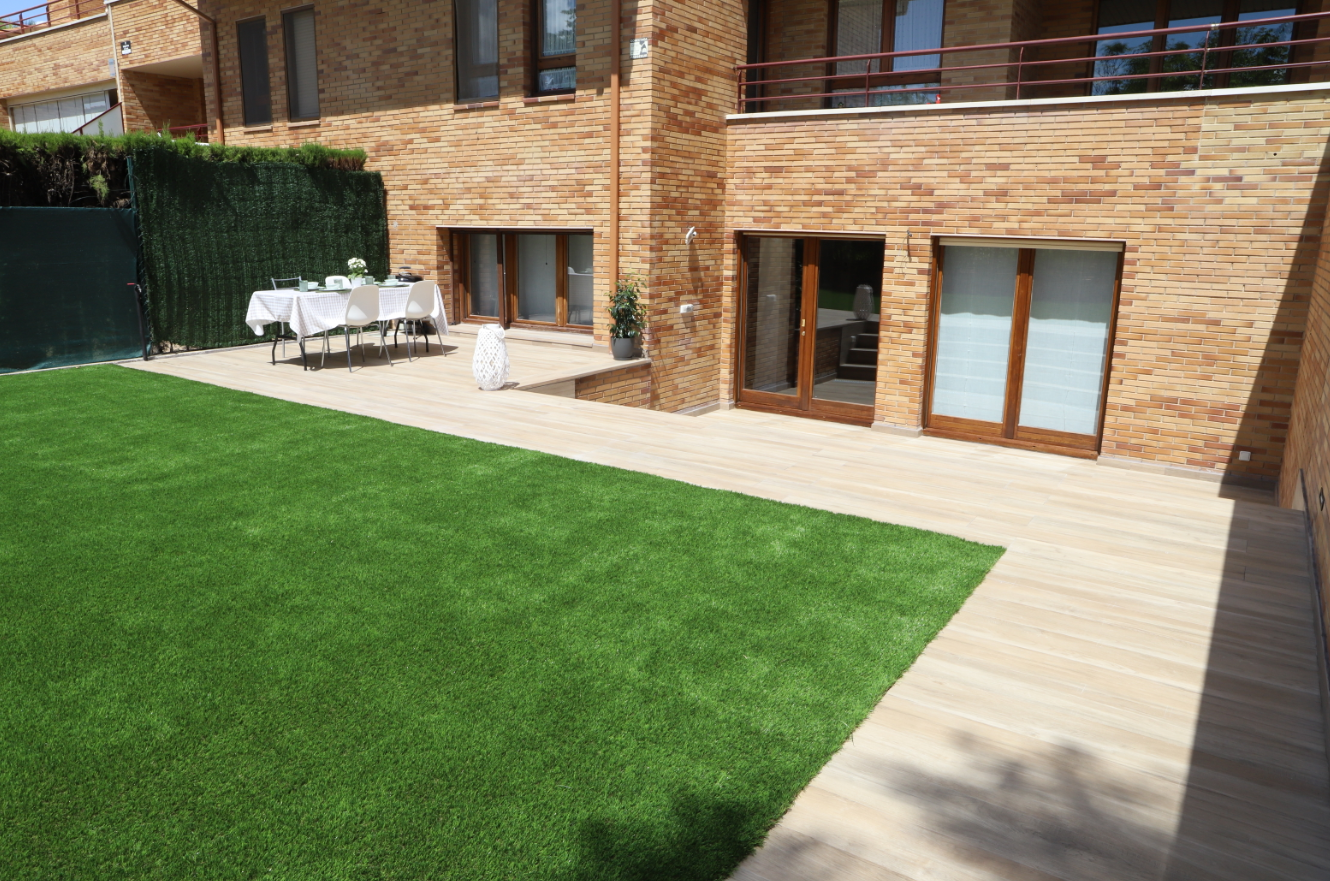
What are the advantages of putting athermic paving stones on terrace flooring and around swimming pools?
Installing athermic paving stones in your outdoor area offers several benefits, such as:
- More comfortable: wellbeing outside
The main benefit of these tiles is the lower surface temperature compared to other tiles, making it easier to walk barefoot.
- Greater safety: Reducing the risk of foot burns.
Safety is increased, and the risk of injury and discomfort is reduced.
- More time for enjoyment: longer leisure hours
Where can athermic paving stones be used?
Athermic paving stones are ideal for flooring in outdoor areas exposed to the sun and any tiling outside in very warm climates. The most common places to install them are:
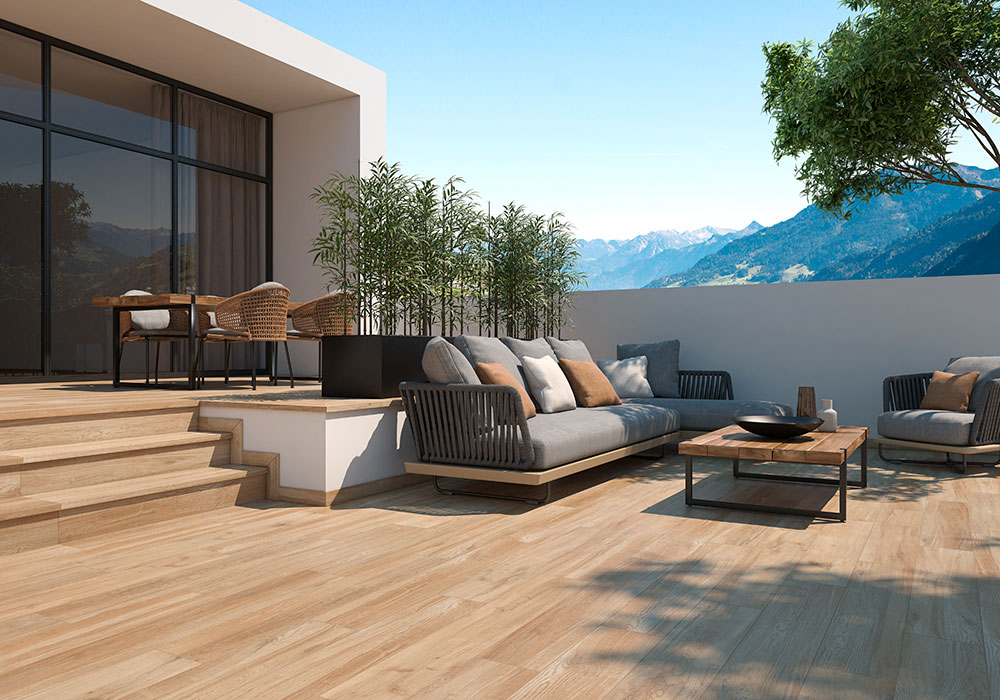
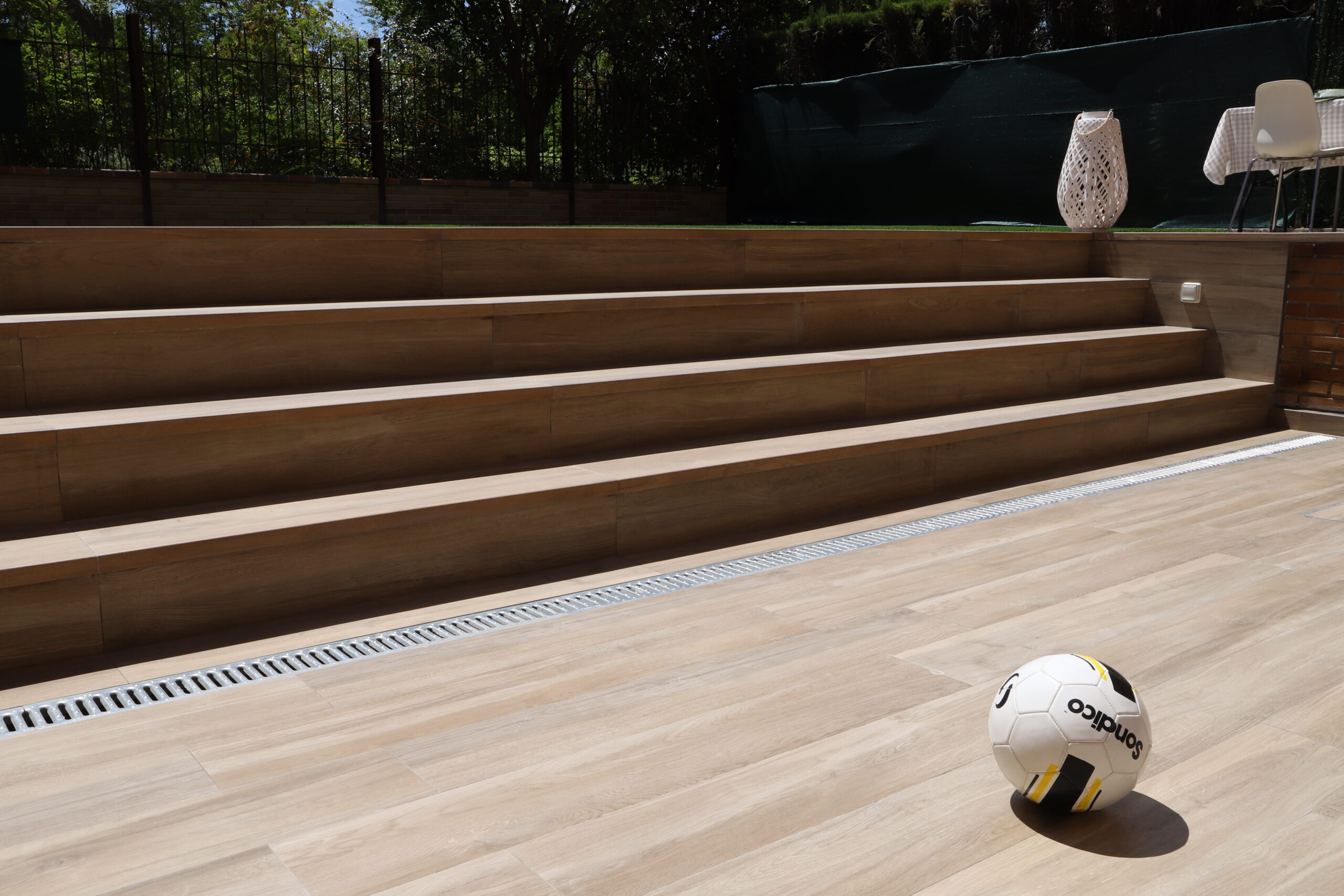
- Terraces and patios: Because thermal tiles heat up less, they extend the hours of fun and play and leisure time.
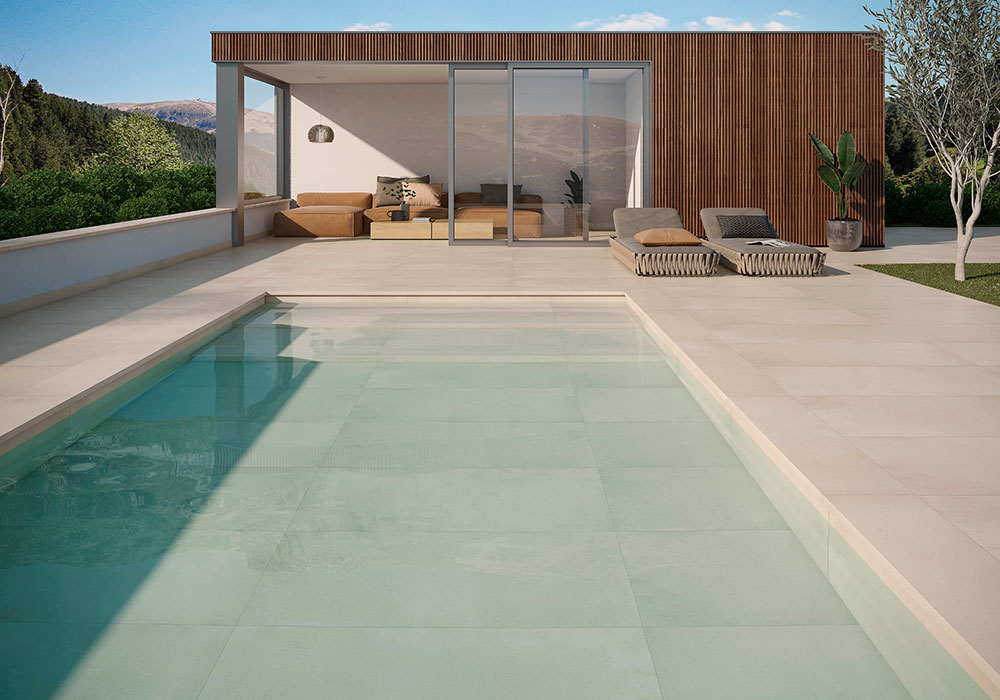
- Pools: tiling around the pool basin and edges makes for cooler stepping.
- Solariums: Allow for relaxation and sunbathing.
- Gardens and paths: In addition to heating up less, thermal tiles provide design, style, and aesthetics to the outdoors.
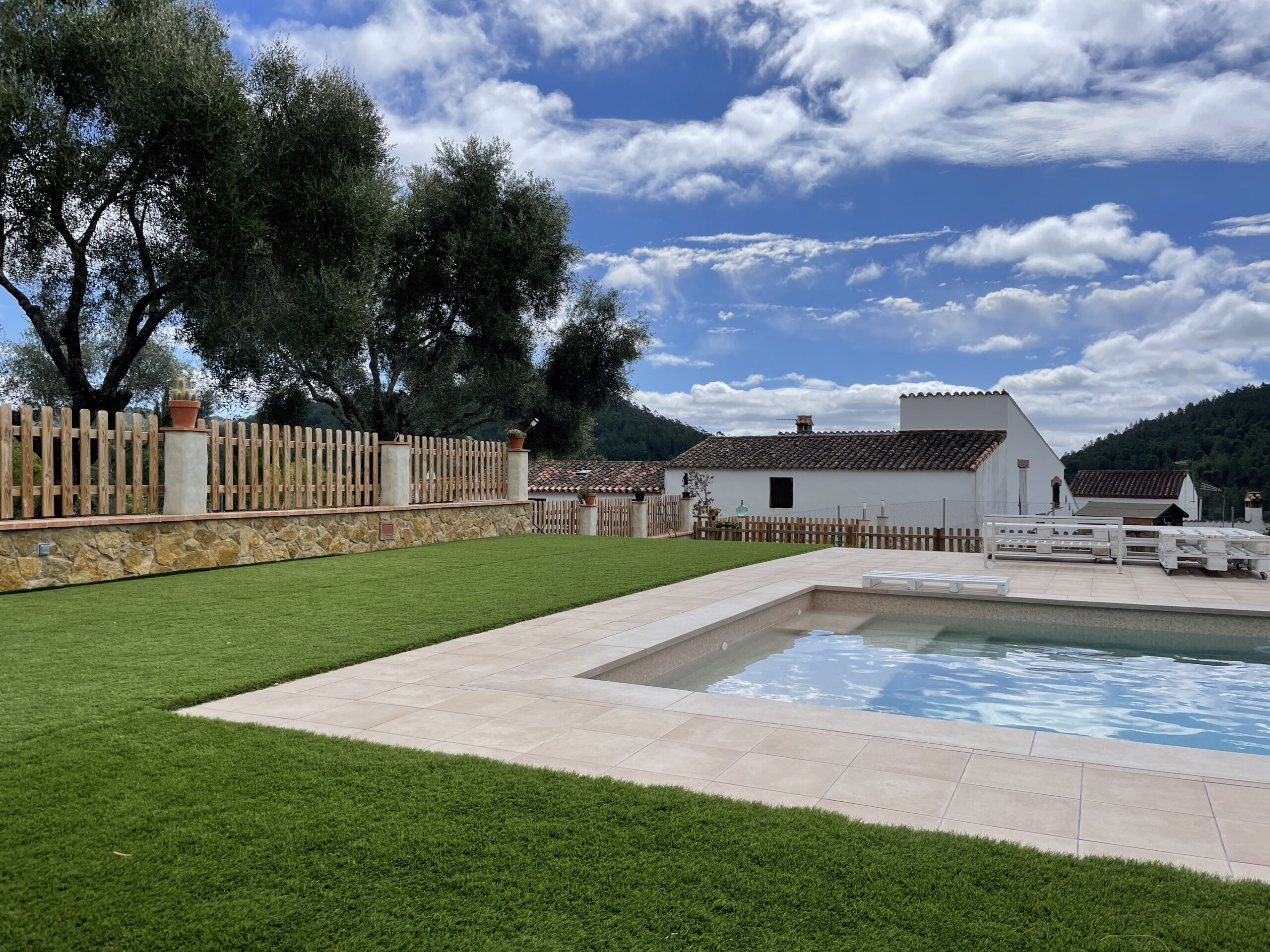
What is the solar reflectance index or SRI?
The solar reflectance index of a material indicates which fraction of incident solar radiation is reflected by the surface evaluated and, therefore, not absorbed. It is normally expressed as a value between 0 and 1.
- A value of 1 indicates that the surface reflects no solar radiation; that is, all solar radiation is absorbed and therefore it heats up. This would correspond to white colors.
- A value of 0 indicates that the surface reflects all the solar radiation that strikes it and therefore remains at a lower temperature. This would correspond to black colors.
How does the solar reflectance index influence the thermal experience?
Knowing this index allows us to anticipate the thermal experience provided by a particular ceramic floor tile: the higher the SRI, the lower the temperature the tile will reach under the sun.
What SRI should a paving stone have in order to be considered athermic?
For a tile to be considered athermal, it must have a reference index greater than or equal to 0.5. The SRI is measured and classified according to the ASTM E1980-11 (2019) standard.
In some contexts, this figure can also be expressed as a percentage: as a value between 0% and 100%, where 0% represents no reflection and 100% represents total reflection; in other words, the ceramic tiles do not absorb heat.
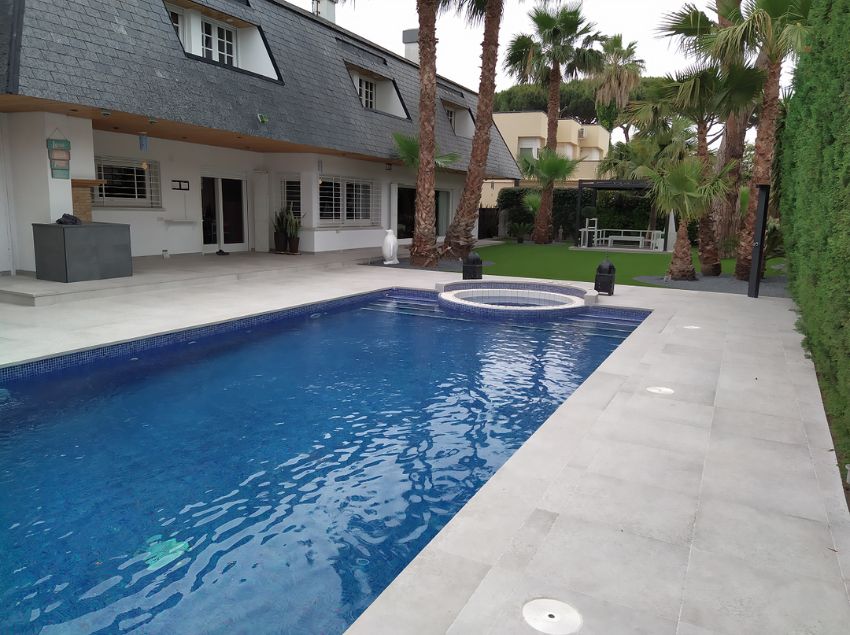
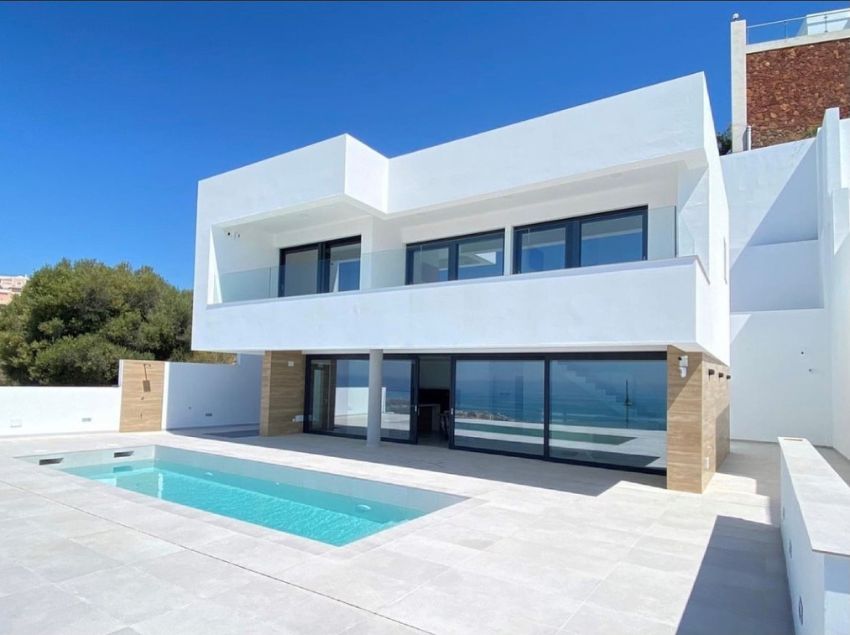
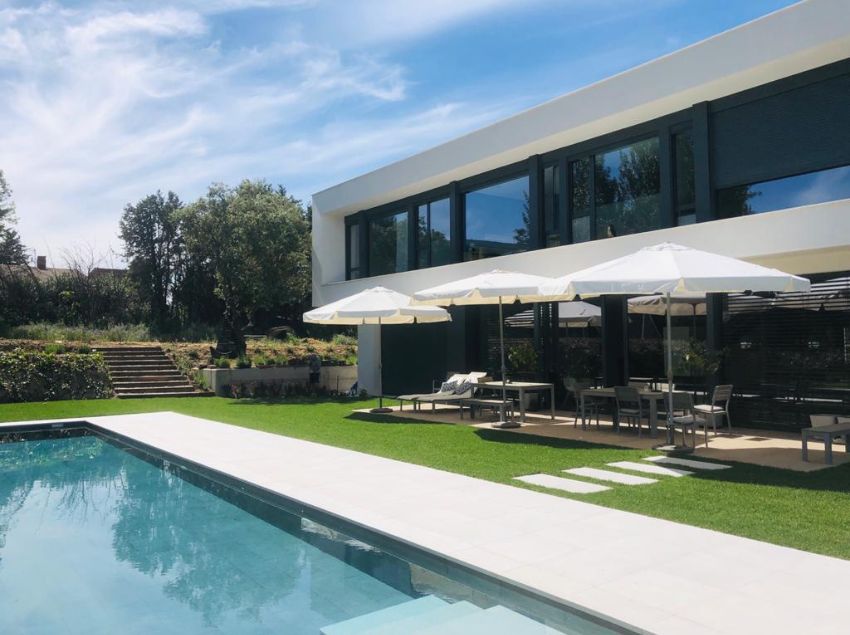
What should paving stones for outdoor areas in very warm regions be like?
Paving stones for patios outside single-family homes in very warm regions, community pools outside residential buildings or terraces at holiday homes must be:
- Ceramic tiles: Ceramic paste generally has a lower capacity for solar radiation absorption than other materials. However, the exact behavior of the ceramic under heat depends on the specific composition as well as the surface finish of the paving tile.
- Light tones: In general, dark tiles tend to absorb more solar radiation than softer colors. This is due to the fact that the first have a greater capacity to absorb light while light ones tend to reflect it more.
- Athermal tiles: with an SRI greater than or equal to 0.50. In warm areas with high sun exposure, light, reflective colors with an SRI greater than 0.65 should be chosen.
- Non-slip for added functionality in areas around swimming pools to prevent slipping.
In any case, it's important to keep in mind that no matter how white a ceramic tile is, if it's exposed to a lot of sunlight, it will also heat up, although to a lesser extent than dark-colored flooring. It's even possible to burn if the amount of sunlight is high.
Would you like to enjoy a cooler and safer floor this summer?
If you’re thinking about renovating your outdoor area and are looking for a solution that offers comfort, safety and design, athermictiles are the perfect choice. At Gres Aragón, we have extensive experience in ceramic floor tiles for warm climates and we can help you find the right choice for your open-air project. Check with our experts and take a step towards enjoying a more comfortable, safer and more elegant outdoor area this summer.